Indo-European Language Family

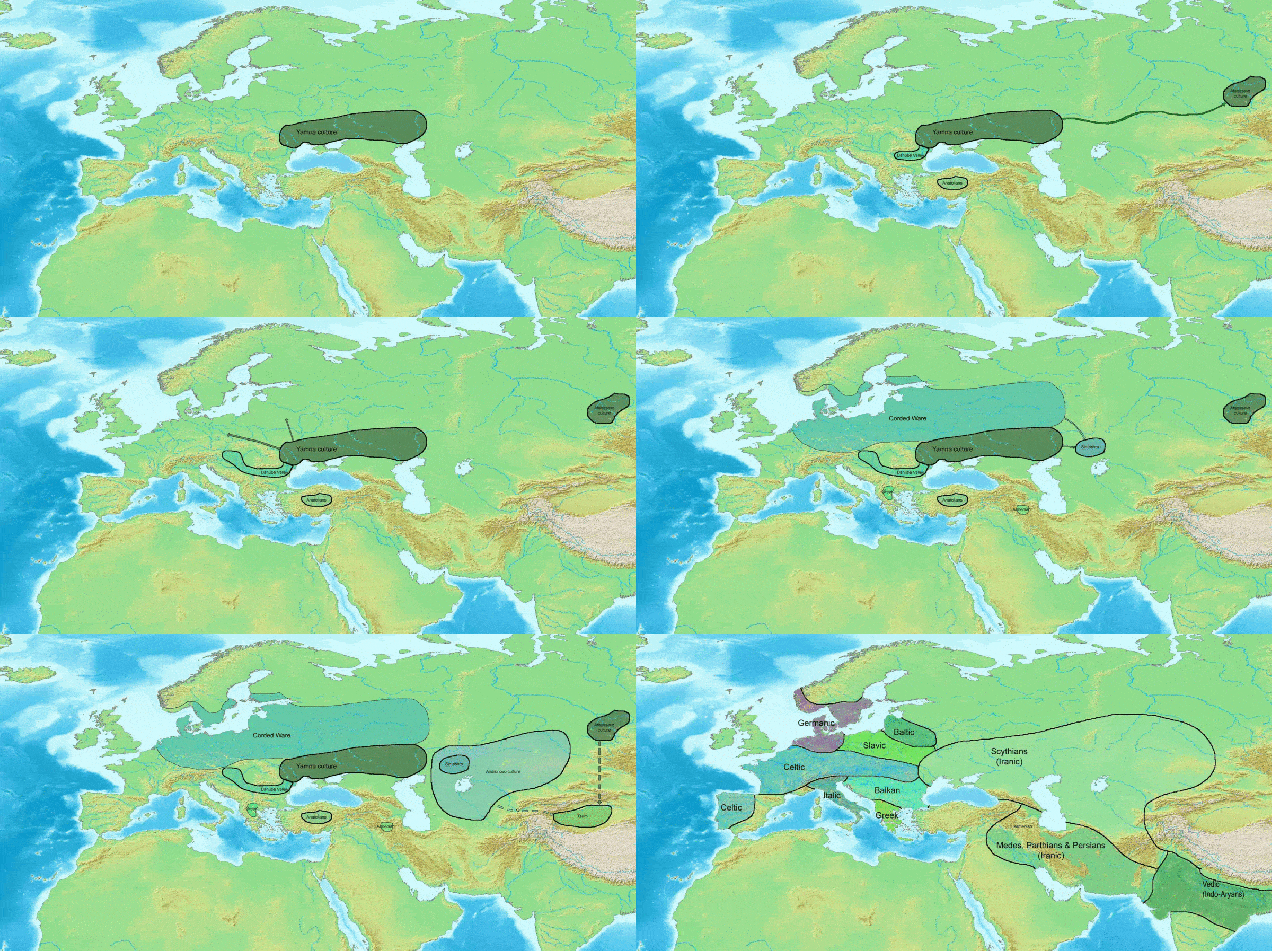
ie-migrations
Indo-European migrations. Source: Wikipedia

The two languages I speak fluently, English and Hindi, are both Indo-European languages. Both originated from the Proto-Indo-European (PIE) language that was spoken by a Bronze-Age civilization in central Asia around 3500 BC.

Today, 46% of the human population speaks an Indo-European language natively, by far the highest of any language family. There are about 445 such languages currently in use, according to the estimate by Ethnologue, with over two-thirds (313) of them belonging to the Indo-Iranian branch. The most widely spoken Indo-European languages by native speakers are Spanish, English, Hindustani (Hindi and Urdu), Portuguese, Bengali, Russian, Persian and Punjabi, each with over 100 million speakers.


51233rcinbl-_sl300_In The Story of Human Language,a fantastic lecture series on the evolution of language, the linguist John McWhorter describes the discovery of the Indo-European language family.

In 1786, William Jones, a British jurist and Orientalist, presented an address to the Bengal Asiatic Society in which he observed:

“The Sanskrit language, whatever be its antiquity, is of a wonderful structure; more perfect than the Greek, more copious than the Latin, and more exquisitely refined than either, yet bearing to both of them a stronger affinity, both in the roots of verbs, and in the forms of grammar, than could possibly have been produced by accident; so strong, indeed, that no philologer could examine them all three, without believing them to have sprung from some common source, which, perhaps, no longer exists.”

Jones was making the first official observation of the fact that groups of languages develop from single ones; that is, he inaugurated the study of the natural history of language.

The kind of “affinity” he referred to involved not only word roots in common among Sanskrit, Latin, and Greek but also aspects of grammar. For example, even the case endings on nouns in these languages are clearly related: tooth in four cases in the languages William Jones referred to:

            SANSKRIT   GREEK    LATIN 
nominative       dán   odón     dēns 
genitive       datás   odóntos  dentis 
dative          daté   odónti   dentī 
accusative    dántam   odónta   dentem

To see the similarity among modern descendants of PIE, take a look their word for “tooth” in these Indo-European languages.

Dutch      tand
German     zahn
Danish     tand
Icelandic  tönn
Welsh      dant ‎
Latin      dēns
Lithuanian dantìs
Armenian   ‎atam   (ատամ)
Persian    ‎dandân (دندان)
Sanskrit  ‎ dát    (दत्)
Hindi      dānt   (दांत)

500px-indo-european_branches_map-svg

A map showing the approximate present-day distribution of the Indo-European branches within their homelands of Europe and Asia. [Link to the legend on Wikipedia]

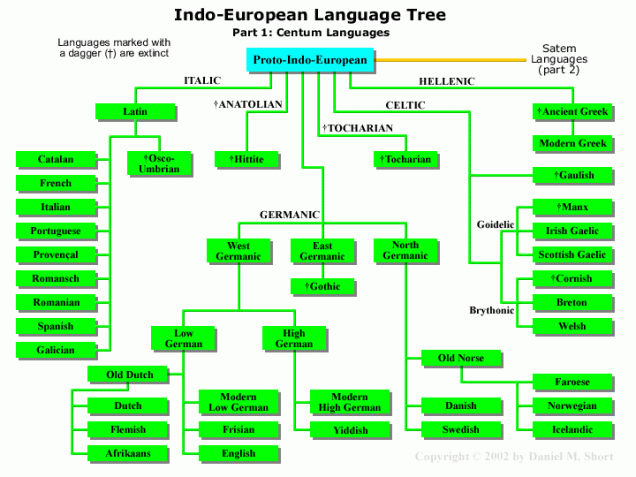
ietreecentum1
Indo-European Language Tree (Part 1) [source
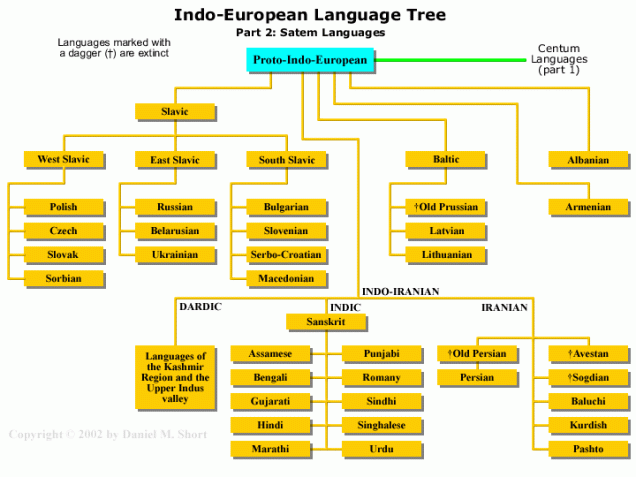
ietreesatem1
Indo-European Language Tree (Part 2) [source]
 

Breakthroughs for Global Development

Lawrence Berkeley National Laboratory developed this amazing report in 2014 that identifies the 50 most critical scientific & technological breakthroughs required for sustainable global development.

The report is a very useful blueprint for technologists and entrepreneurs looking to solve the difficult problems of our world. In particular, it provides two views for analyzing the technical complexity and commercial potential of the identified breakthroughs.

Technical Complexity
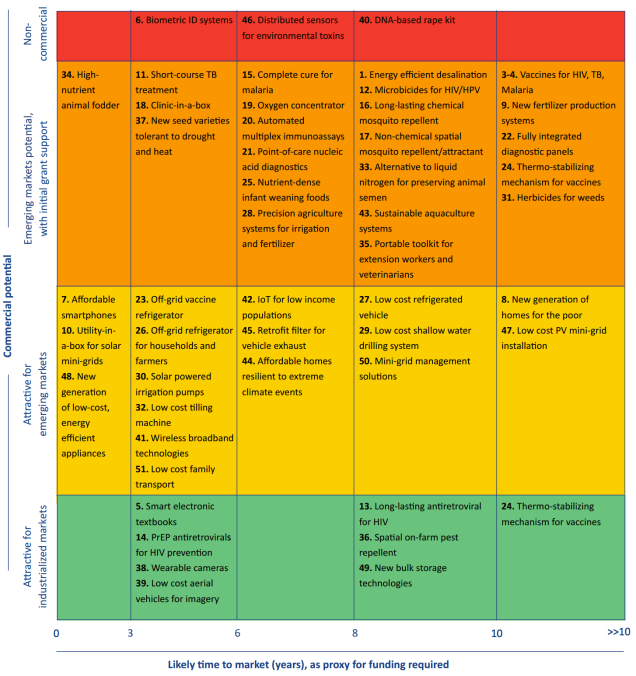
breakthroughs-commercial-potential

Commercial Potential

breakthroughs-commercial-potential

Top Ten

Here are the top 10 breakthroughs (in no order) identified in the report.

#1. A new method for desalination: scalable, low cost, and using renewable energy.
Water scarcity is one of the most critical problems the world is facing today, and this problem is likely to get significantly worse in the coming years. An increasing amount of the world’s freshwater is becoming brackish, and more is being dissipated into oceans and other bodies of unusable water. Reclaiming this seawater and inland brackish water through desalination will need to be a significant part of the larger solution to meet the needs of the growing global population. Current forms of desalination (e.g., reverse osmosis) are prohibitively expensive and energy-intensive.

#2-4. Vaccines that can effectively control and eventually help eradicate the major infectious diseases of our time—HIV/AIDS, Malaria and TB.
Collectively, HIV/AIDS, Malaria and TB kill almost 4 million people a year, and represent a significant disease burden for low income populations in sub-Saharan Africa and South Asia. Effective vaccines for these diseases do not exist yet due to the intrinsic complexity of the pathogens causing them, and a lack of understanding of the specific mechanisms through which our immune systems protect against these diseases.

#5. ‘Smart’ electronic textbooks which dynamically adapt content for different skill levels, languages and other user specific needs.
Education for low income students is fundamentally constrained by the absence of qualified teachers and adequate instructional tools. As smartphones and tablets become increasingly affordable and feature-rich, and as so much of the world gets connected to the Internet, there is a tremendous opportunity to leapfrog current education methods, and create new models of content development, content delivery and instruction. ‘Smart’ electronic textbooks will require curated and up-to-date content, ‘wiki’ interfaces for vernacular and other locally relevant and gender-inclusive material, visual and dynamic learning tools for students, interfaces and tools for teachers, student-teacher interaction
and peer-to-peer collaboration.

#6. Biometric ID systems, linking birth registry, land title registry, financial services, education history, medical history, and other information critical for ICT enabled services.
Individuals born in industrialized countries have formal IDs, which are linked to a range of services vital to their wellbeing and empowerment, and are an intrinsic part of their day-to-day lives. ID systems are inadequate in most developing countries, in part due to the absence of the institutional framework necessary for issuing and using IDs for individuals and businesses. This is one of the reasons why a majority of citizens in many low income countries operate in informal economies, cannot assert all the rights they are entitled to, and cannot hold their governments accountable for services. Biometric technologies can enable developing countries to bootstrap ID systems, empowering individuals to assert ownership of land and other assets, have accurate medical, educational and financial histories available to service providers, and truly become part of formal economic structures. Stringent safeguards are required to ensure privacy, and to protect individuals from being targeted by repressive regimes.

#7. Affordable (under $50) smartphones that support full-fledged Internet services, and need limited electricity to charge.
The recent penetration of mobile phones across the broader developing world has been nothing short of dramatic. However, most low income consumers still use basic phones which do not offer advanced functionality beyond voice and SMS text. For true digital inclusion, we believe that smartphones—with their ability to exchange information via a range of modalities (e.g., touchpad, voice-driven control, various ports), and their ability to support a wide array of Internet-based services—are essential. Unfortunately, today’s smartphones are too expensive for low income users.

#8. A new generation of homes with advanced construction material, especially for the urban poor: durable, lightweight, and affordable, with integrated solar-powered lighting, ventilation, and toilets.
The majority of the poor—particularly in urban areas—live in densely packed shacks made with found material, which have very limited light or ventilation, and no running water or sanitation. This contributes to a range of health problems such as TB, diarrheal disease, pneumonia, and other respiratory conditions. Improving living conditions by reinventing the home for the poor, with the characteristics listed above, can significantly improve quality of life and is critical for improving health outcomes in developing countries.

#9. New methods to produce fertilizers to replace current processes, which are extremely capital intensive and have significant environmental footprints.
Production of synthetic fertilizers—a mainstay of agricultural yields for many decades—depends on processes that are very capital intensive (manufacturing plants and mines costing hundreds of millions to billions of dollars), and in the case of nitrogen, extremely dependent on natural gas (nitrogen fixation factories must be located close to natural gas sources). As a result there are no fertilizer manufacturing plants in sub-Saharan Africa, and this creates a cost burden for African farmers who must buy fertilizer from international sources. From a more global perspective, current production processes have a large ecological footprint, create dependence on fossil fuels for food, and introduce volatility in fertilizer and food prices tied to volatility in fossil fuel prices. New research is required to explore options like simulating natural nitrogen fixing mechanisms (found in crops such as legumes), foliar nutrient uptake (instead of roots, to reduce fertilizer runoffs from farms), etc. In addition, it will be important to improve the safety and effectiveness of existing sustainable methods like composting biological waste.

#10. A ‘utility-in-a-box’ for making it simpler, cheaper and faster to set up and operate renewable energy mini-grids.
Currently, setting up mini-grids in rural areas is time consuming, complex and costly, due to weak and fragmented supply chains, poor roads, a lack of skilled workers, and the absence of standardized, modular components. A ‘utility-in-a-box’—a bundled package of mini-grid components that can be easily integrated and installed, and whose parts work seamlessly, making operations simpler—would make mini-grids much more attractive to both service providers and investors, and significantly reduce barriers to expansion. In short, it would make the business of running rural mini-grids more profitable and less risky.

References

Featured image from NPR: The 50 Most Effective Ways To Transform The Developing World
UI/UX Toolkit for Product Managers

AKA: How I built an app in two weeks

In early 2016, I up-leveled my interest in iOS app development and completed a Udacity Nanodegree certificate in iOS Development. It was a rigorous but fruitful four-month journey. I recommend the program to all product managers (or future developers) who want to understand modern app development better.

Here, I will tell you how I built the Hungry Baby app. It helps busy parents create easy, nutritious, and varied meal plans for their baby every single week.

This is what it looks like.

This slideshow requires JavaScript.

Github Repository: https://github.com/qwertyshan/HungryBaby

Now, here are the key resources that I found to be most useful in creating this app. In my own research and creation process, I went down a lot of paths that hit dead ends. In the following list, I am trimming the paths down to the fruitful ones.

Design

Process:

Apple’s WWDC video “Prototyping: Fake It Till You Make It” taught me how to prototype quickly and easily.

https://developer.apple.com/videos/play/wwdc2014/223/

Inspiration:

I learned a lot about common design patterns by studying other apps.

http://inspired-ui.com

Templates:

Keynotopia is fantastic and easy to use! I got the $99 pack and will use it to design all of my future apps.

http://keynotopia.com

Icons:

This was the best site for free, high-quality icons. Good icons open up so many design possibilities!

https://icons8.com

Colors:

I had to learn about colors.

http://www.rocket-design.fr/color-template/

Prototyping:

I created a prototype of my app in Keynote without a single line of code. The results were awesome! All of the screenshots in the following showcase page were made in Keynote. You won’t know it by looking at it.

http://app.shanrao.org/HungryBaby

Build

Backend Processing:

Google’s Firebase is easy and free (for low utilization).

https://www.firebase.com

Backend Data:

Valid JSONs can be tricky to create. This site made it easy. Once I had my data in a JSON, I could upload it to Firebase and my backend application was ready!

http://www.jsoneditoronline.org

File Hosting:

I used Firebase to host my static image files.

iOS Libraries:

I learned how to use CocoaPods to install the Firebase plugin. It was tremendously useful (and fairly easy).

https://www.raywenderlich.com/97014/use-cocoapods-with-swift

iOS Coding:

Of course, this was the most time-consuming part: actually writing the code. The following sites helped the most.

Overall, it took about 80 hours of work (spread over a month) to design and develop the app. It was fun and brought me up to speed with modern mobile design and development techniques.

Influencing People

We are wired to be influenced through social means. Social influence, in fact, is so powerful that it often bypasses our cognition such that we don’t realize that we are being influenced. Here, I explore some mechanisms of social influence.

Social Proof

Social proof is an amazingly powerful influence tactic. It’s demonstrated best by the test of social influence and conformity designed by Solomon Asch.

Asch highlighted two forms of pressure towards conformity. The first is Normative Pressure–the avoidance of discomfort in disagreeing with the group. The second, more worrying condition, is Informative Pressure–the changing of one’s judgement in the belief that the majority has to be correct and, therefore, the self has to be wrong.

Informative pressure leads to strong social influence.

https://www.youtube.com/watch?v=BgRoiTWkBHU

Alex Laskey built company called O-Power entirely based on the power of social proof.

Some other mechanisms to activate social proof:

  • Benchmarking
  • Showing endorsements of high status others
  • Calling for a vote when you have majority on your side

Authority

Symbols and signs of authority easily influence people into compliance. Titles, signaling your expertise, the way you dress, business attire, etc. elicits compliance with authority.

Stanley Milgram’s famous experiment showed how susceptible all of us are to influence by authority.

https://www.youtube.com/watch?v=yr5cjyokVUs

Recall, Framing, and Anchoring

Recall: We are highly influenced by very vivid imagery, by prominent events, and more recent events.

Framing: The same idea can be framed as a gain to influence the audience towards risk averse behaviors, or framed as a loss to influence the group towards more risk taking behaviors.

Anchoring: Negotiations and discussions can be anchored to either on high or low values– be it a budget estimate, a cost estimate, price, or an offer to a customer.

Sticky Messages

In their book “Made to Stick“, the Heath brothers talk about six principles of sticky messages.

  1. Simplicity: How do we find the essential core of our ideas?
    • To strip an idea down to its core, we must be masters of exclusion. We
      must relentlessly prioritize.
    • Saying something short is not the mission—sound bites are not the ideal. Proverbs are the ideal. We must create ideas that are both simple and profound.
  2. Unexpectedness: How do we get our audience to pay attention to our ideas, and how do we maintain their interest when we need time to get the ideas across?
    • We need to violate people’s expectations. We need to violate people’s expectations. We need to be counterintuitive. We must generate interest
      and curiosity.
    • How do you keep students engaged during the forty-eighth history class of the year? We can engage people’s curiosity over a long period of time by systematically “opening gaps” in their knowledge—and then filling those gaps.
  3. Concreteness: How do we make our ideas clear?
    • We must explain our ideas in terms of human actions, in terms of sensory information.
    • Mission statements, synergies, strategies, visions—they are often ambiguous to the point of being meaningless. Naturally sticky ideas are full of concrete images—ice-filled bathtubs, apples with razors—because our brains are wired to remember concrete data.
  4. Credibility: How do we make people believe our ideas?
    • Sticky ideas have to carry their own credentials.
    • In the sole U.S. presidential debate in 1980 between Ronald Reagan and Jimmy Carter, Reagan could have cited innumerable statistics demonstrating the sluggishness of the economy. Instead, he asked a simple question that allowed voters to test for themselves: “Before you vote, ask yourself if you are better off
      today than you were four years ago.”
  5. Emotions: How do we get people to care about our ideas?
    • We make them feel something.
    • In the case of movie popcorn, we make them feel disgusted by its unhealthiness. The statistic “37 grams” doesn’t elicit any emotions.
  6. Stories: How do we get people to act on our ideas?
    • We tell stories.
    • Hearing stories acts as a kind of mental flight simulator, preparing us to respond more quickly and effectively.

Hans Rosling, in his famous TED talk, demonstrated these principles in the first 3 minutes of his talk.

Non-Verbal Influence

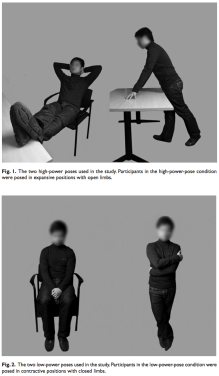
screen-shot-2016-11-27-at-10-55-38-am
Top: High-power poses. Bottom: Low-power poses. Source: Carney, Cuddy, Yap 2010

Carney, Cuddy, and Yap, in their 2010 paper “Power Posing”, showed that “a person can, by assuming two simple 1-min poses, embody power and instantly become more powerful”.

There are several non-verbal mechanisms to influence others:

  • Eye-contact
  • Mirroring behavior
  • Relaxed facial expressions (vs. nervous)
  • Hand gestures:
    • Illustrational (pointing to illustrate)
    • Positive (palms up or perpendicular vs. down)
  • Firm handshake
  • Physical proximity (less than 3 feet)

May of the above gestures are highly culture-specific.

Time of Day

There is some evidence that early mornings or the time after meal breaks are the best times to engage an audience.

Danziger et al studied more than 1,000 parole decisions made by eight experienced judges in Israel over 50 days in a ten-month period. After a snack or lunch break, 65 percent of cases were granted parole. The rate of favorable rulings then fell gradually, sometimes as low as zero, within each decision session and would return to 65 percent after a break.

Reference

For more information, check out the excellent Coursera course called Influencing People, by Professors Scott DeRue and Maxim Sytch of Michigan University.


The Smart-Talk Trap

The Smart-Talk Trap by Jeffrey Pfeffer and Robert I. Sutton

Originally published in the May–June 1999 issue of Harvard Business Review

Smart-Talk

We found that a particular kind of talk is an especially insidious inhibitor of organizational action: “smart talk.” The elements of smart talk include sounding confident, articulate, and eloquent; having interesting information and ideas; and possessing a good vocabulary. But smart talk tends to have other, less benign components: first, it focuses on the negative, and second, it is unnecessarily complicated or abstract (or both). In other words, people engage in smart talk to spout criticisms and complexities. Unfortunately, such talk has an uncanny way of stopping action in its tracks.

Why Talk Prevails

Managers let talk substitute for action because that’s what they’ve been trained to do. Many executives in contemporary organizations have been to business school, and even those who don’t have M.B.A. degrees often attend executive education programs taught by business school faculty. What do they learn in those programs? That the ability to talk—and particularly to talk smart—pays.

On Complexity

Rare is the manager who stands before his or her peers to present a new strategy with a single slide and an idea that can be summarized in a sentence or two. Instead, managers congratulate themselves and one another when they come up with ideas that are so elaborate and convoluted they require two hours of multipart, multicolored slides and a liberal sprinkling of the latest buzzwords.

Organizations Who Shut the Smart-Talk Trap

1. They have leaders who know and do the work.

Companies that use talk productively—to guide and spur action—have leaders who make it a priority to learn and do the work.

2. They have a bias for plain language and simple concepts.

Companies that avoid the knowing-doing gap are often masters of the mundane. Executives devote their efforts to a few straightforward priorities that have clear implications for action. These organizations realize the value of direct language and understandable concepts. They consider “common sense” a compliment rather than an insult.

3. They frame questions by asking “how,” not just “why.”

4. They have strong mechanisms that close the loop.

5. They believe that experience is the best teacher.

Enlightened trial and error outperforms the planning of flawless intellects.


The Anthropocene Epoch

Humans have changed the planet remarkably quickly in the last two generations. We are only just starting to understand our own impact. However, as a global society, we are far from acknowledging the impending disaster that our species may be walking towards.

Video from the Smithsonian Magazine.

https://youtu.be/tWFoF-jsc2A

Excerpt from Smithsonian Magazine: What is the Anthropocene and Are We in It? by Joseph Stromberg

Have human beings permanently changed the planet? That seemingly simple question has sparked a new battle between geologists and environmental advocates over what to call the time period we live in.

According to the International Union of Geological Sciences (IUGS), the professional organization in charge of defining Earth’s time scale, we are officially in the Holocene (“entirely recent”) epoch, which began 11,700 years ago after the last major ice age.

But that label is outdated, some experts say. They argue for “Anthropocene”—from anthropo, for “man,” and cene, for “new”—because human-kind has caused mass extinctions of plant and animal species, polluted the oceans and altered the atmosphere, among other lasting impacts.

This graphic from Nature, Anthropocene: The human age by Richard Monastersky, shows how quickly we’ve transformed our planet.

nature-anthropocene-1203-a

Lemmings Running Towards a Cliff

Noam Chomsky presents the analogy of lemmings running towards a cliff.

https://youtu.be/Axdrh9F3Kqo

New Opportunities

Writing for the Breakthrough Journal, the geographer Erle Ellis reviews existing evidence and presents a counterpoint, saying “the history of human civilization might be characterized as a history of transgressing natural limits and thriving.”

Excerpt from summary of Breakthrough Journal article: The Planet of No Return by Erle Ellis

The main constraints on human populations are not environmental, Ellis concludes. Agricultural productivity around the world rises as population density increases. “Populations work harder and employ more productive technologies to increase the productivity of land only after it becomes a limiting resource,” Ellis notes. And in most places, yield-increasing technologies were introduced long before they were needed to overcome natural limits.

What’s ultimately at stake, Ellis argues, is not human civilization, but the ecological heritage of the Holocene. The good news is that urbanization could “drive ever increasing productivity per unit area of land, while at the same time allowing less productive lands to recover.”

We should neither turn a blind eye to our ecological impacts nor exaggerate them, says Ellis. Rather, we must embrace our role as planetary stewards and start seeing the Anthropocene as “the beginning of a new geological epoch ripe with human-directed opportunity.”

Well, that’s heartening.

Design Problems in Global Development

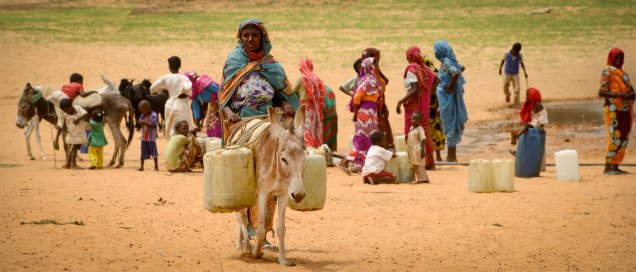
original
Women in Sudan. Courtesy: UNDP

Alex Dehgan’s new Coursera offering on the Innovation and Design for Global Development has led me to see that many of the challenges in creating effective international development efforts are very similar to the challenges of launching successful technology products. Both are design problems, and there are numerous examples of failed efforts in both domains. Let’s explore two cases, both involving the use of products to solve for development challenges.

PlayPump

PlayPump was built a water pump for African countries. It was designed by a South African entrepreneur as a merry-go-round connected to a ground water pump. As children played on the PlayPump, water was pumped from the ground into an elevated water tank. The children had fun. The village got water. The walls of the water tank were even used for revenue generating billboard advertising.

PlayPump generated a lot of enthusiasm. Many donors got involved, including Laura Bush–the then first lady of the United States. Soon, PlayPump expanded to many African countries.

“A real disaster”

In 2010, Frontline produced a follow-up report and summarize a study of the PlayPump.

A report commissioned by the Mozambique government on the PlayPump that was never released, cited… [many] problems… – women finding it difficult to operate; pumps out of commission for up to 17 months; children not playing as expected on the merry-go-rounds, and maintenance, “a real disaster,” the report said.

Soccket

Tiny Spark wrote a great story on the Soccket, so I’ll quote them here:

It’s a story about a pair of young Harvard graduates who said it was possible to harness the world’s love for soccer to generate electricity for poor kids.  They called their product the Soccket, formed a for-profit company, and began selling it to corporations and foundations in the U.S. and around the world. Co-founder Jessica Matthews launched the Soccket back in 2008, saying she had helped develop a soccer ball that converts kinetic energy into power. Just a half hour of play would generate three hours of light.

“The third day, the light went out”

The balls didn’t work in real-life conditions.

Failure to Understand the User

The failure of many development programs can be traced to a lack of true understanding of their targeted users. In the cases of the PlayPump and Soccket, solutions were developed by well-meaning outside agents who did not understand the full problem space that their products were intended to work in. More specifically, they did not appreciate the complex layers of needs, wants, and constraints that define their users’ lives and environments.

PlayPump solved for how water can be pumped while kids play. Soccket solved for how kinetic energy of soccer balls can be used to generate electricity. The result was that while the products did solve for their use-cases (quality problems not withstanding), they weren’t actually useful in the broader context of their users’ lives. In other words, the products were not designed well.

So how can products be designed better? How does a product designer understand the multitudes of needs, wants, and constraints, both explicit and latent, of their target users? Well, I think a design process centered around users is the only real way to design good products.

Human Centered Design

Here’s what IDEO says about the Human Centered Design technique.

It’s a process that starts with the people you’re designing for and ends with new solutions that are tailor made to suit their needs. Human-centered design is all about building a deep empathy with the people you’re designing for; generating tons of ideas; building a bunch of prototypes; sharing what you’ve made with the people you’re designing for; and eventually putting your innovative new solution out in the world.

We will explore HCD and Design Thinking further in future blogs.

The Wedge Dowel

On a recent jaunt through design heaven, I found a beautiful desk for the apartment. Of course, it was at IKEA.

lisabo-desk__0416640_pe573940_s4
The Lisabo Desk
ikea_today_knutmariannehagberg_detail_1
The connection dowel design

The Lisabo desk is beautiful in its simplicity, with a visual lightness and an elegant, organic texture. It was love at first sight and I brought it home right away.

But the beauty of this table isn’t limited to its aesthetics. Opening the flatpack revealed a delightfully designed assembly system. Each leg has a connection dowel that attaches to the table in a slotted hole, requiring only a small wheeled tensioner to hold it firmly in place. Brilliant!

The design geek that I am, I couldn’t stop thinking about the care that must have gone into coming up with this feature. Well, it turns out that the designers of the table have won some awards for this creation.

The connection dowel design was inspired by IKEA’s wedge dowel. That connector enabled furniture assembly without screws, cutting down assembly time by 80%.

The video provides great insights into IKEA’s design process. IKEA’s designers seem to work very closely with prototyping and building teams. It suggests an iterative and design oriented approach necessary for great products that stand the test of time and are loved by users.